How Do Yoy Know if You Have a Dvt?
Overview
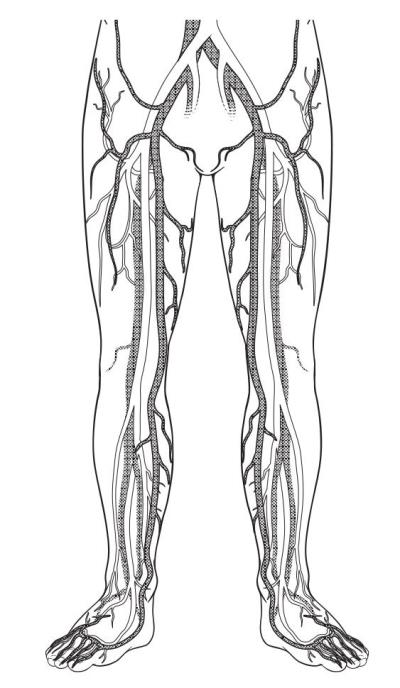
What is deep vein thrombosis?
Deep vein thrombosis (DVT, likewise called venous thrombosis) is a claret jell that develops in a vein deep in the torso. The clot may partially or completely block blood flow through the vein. Most DVTs occur in the lower leg, thigh or pelvis, although they likewise tin can occur in other parts of the trunk including the arm, encephalon, intestines, liver or kidney.
What is the danger of DVT?
Fifty-fifty though DVT itself is not life-threatening, the blood clot has the potential to break gratuitous and travel through the bloodstream, where information technology can become lodged in the claret vessels of the lung (known as a pulmonary embolism). This tin be a life- threatening condition. Therefore, prompt diagnosis and treatment are necessary.
DVT can besides lead to complications in the legs referred to as chronic venous insufficiency or the mail-thrombotic syndrome. This status is characterized past pooling of claret, chronic leg swelling, increased force per unit area, increased pigmentation or discoloration of the skin, and leg ulcers known every bit venous stasis ulcers.
What is the difference betwixt DVT and a superficial venous thrombosis?
A superficial venous thrombosis (too called phlebitis or superficial thrombophlebitis) is a blood clot that develops in a vein close to the surface of the skin. These types of blood clots practise not ordinarily travel to the lungs unless they move from the superficial system into the deep venous system beginning.
Symptoms and Causes
What are the symptoms of DVT?
A DVT commonly forms in 1 leg or ane arm. Not anybody with a DVT will have symptoms, but symptoms can include:
- Swelling of the leg or arm (sometimes this happens of a sudden)
- Pain or tenderness in the leg (may only happen when standing or walking)
- The area of the leg or arm that is swollen or hurts may be warmer than usual
- Skin that is red or discolored
- The veins near the skin's surface may be larger than normal
Symptoms of a pulmonary embolism include:
- Sudden shortness of breath or fast breathing
- Sharp chest pain that ofttimes comes with coughing or movement
- Pain in the back
- Coughing (sometimes with bloody sputum/phlegm)
- Sweating more normal
- Fast heartbeat
- Feeling dizzy or fainting
Some people do not know they have a DVT until the jell moves from their leg or arm and travels to their lung.
It is important to telephone call your doc right abroad or become to the emergency room if y'all have symptoms of a pulmonary embolism or DVT. Do not expect to see if the symptoms "get abroad." Get handling correct away to prevent serious complications.
What causes a DVT?
The post-obit conditions tin can increase your risk of a DVT:
- An inherited (genetic) status that increases your take chances of blood clots
- Cancer and some of its treatments (chemotherapy)
- Express blood menses in a deep vein, due to injury, surgery, or immobilization
- Long periods of inactivity that decrease blood flow, such as:
- Sitting for a long catamenia of time on trips in a car, truck, bus, train or airplane
- Immobility after surgery or a serious injury
- Pregnancy and the first 6 weeks subsequently giving birth
- Being over historic period xl (although a DVT can affect people of any age)
- Being overweight
- Taking birth command pills or hormone therapy
- Having a central venous catheter or pacemaker
Diagnosis and Tests
How is DVT diagnosed?
An appointment to observe out if you have a DVT includes an exam and review of your medical history. You will also need testing. Common tests to diagnose a DVT are:
A duplex venous ultrasound. This is the most common test used to diagnose a DVT. It shows the claret period in the veins and any claret clots that exist. An ultrasound technician will employ pressure level while scanning your arm or leg. If the pressure does not cause the vein to shrink, it could hateful there is a blood clot.
Venography. This test uses Ten-rays to show your deep veins. A special dye (contrast cloth) is injected into your veins so the X-rays show the veins and any claret clots. Whatsoever blockage in blood flow may also be seen. Venography may be used if the results of the duplex ultrasound aren't clear.
Other tests you may accept include:
- Magnetic Resonance Imaging (MRI) or Magnetic Resonance Venography (MRV): MRI shows pictures of organs and structures inside the trunk, and MRV shows pictures of the blood vessels in the trunk. In many cases, MRI and MRV tin can offer more than information than an X-ray.
- Computed tomography (CT) scan is a blazon of X-ray that shows structures inside the body. A CT scan may be used to detect a DVT in the belly or pelvis, as well as blood clots in the lung (pulmonary embolism).
If your doc thinks you may accept a genetic disorder that causes claret clots, you may need blood tests. This may be important if:
- Y'all accept a history of blood clots that cannot be linked to whatever other cause
- You have a blood clot in an unusual location, such equally in a vein from the intestines, liver, kidney or brain
- You have a strong family history of blood clots
Direction and Treatment
Action Guidelines
A DVT may make information technology harder for you to get around at first. You should slowly return to your normal activities. If your legs feel swollen or heavy, lie in bed with your heels propped upwards nigh 5 to vi inches. This helps improve apportionment and decreases swelling.
In improver:
- Do your lower leg muscles if yous are sitting still for long periods of time.
- Stand upwardly and walk for a few minutes every hr while awake.
- Don't wear tight-fitting clothing that could decrease the circulation in your legs.
- Wear pinch stockings as recommended by your doctor.
- Avoid activities that may crusade a serious injury.
What treatments are available for patients with a DVT?
Patients with a DVT may demand to be treated in the hospital. Others may be able to have outpatient handling.
Treatments include medications, compression stockings and elevating the afflicted leg. If the blood jell is extensive, you may need more invasive testing and handling. The main goals of treatment are to:
- Stop the jell from getting bigger
- Preclude the jell from breaking off in your vein and moving to your lungs
- Reduce the risk of some other blood clot
- Prevent long-term complications from the blood clot (chronic venous insufficiency).
Medications
Important Information Nigh Medications
- Take your medications exactly as your doctor tells yous to.
- Have blood tests as directed past your md and go on all scheduled laboratory appointments.
- Practice not stop or first taking any medication (including nonprescription/over-the-counter medications and supplements) without asking your doctor.
- Talk to your doctor most your diet. You may need to brand changes, depending on the medication you take.
Treatment for a DVT can include:
Anticoagulants ("blood thinners"). This type of medication makes it harder for your claret to clot. Anticoagulants likewise stop clots from getting bigger and prevent blood clots from moving. Anticoagulants do non destroy clots. Your trunk may naturally dissolve a clot, but sometimes clots do not completely disappear.
There are dissimilar types of anticoagulants. Your doctor will talk to yous about the best type of medication for you.
If you need to take an anticoagulant, you may merely need to accept it for 3 to 6 months. But, your treatment fourth dimension may be dissimilar if:
- You have had clots before, your treatment fourth dimension may be longer.
- You are being treated for another disease (such equally cancer), you may demand to take an anticoagulant as long as your risk of a clot is higher.
The about common side outcome of anticoagulants is bleeding. You should phone call your physician right away if you notice that you bruise or bleed hands while taking this medication.
Pinch Stockings
You will probable need to wear graduated compression stockings to become rid of leg swelling. The swelling is ofttimes because the valves in the leg veins are damaged or the vein is blocked by the DVT.Near compression stockings are worn just below the knee. These stockings are tight at the ankle and go more loose every bit they go upwards the leg. This causes gentle force per unit area (compression) on your leg.
DVT Treatment Procedures
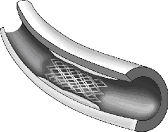
Vena cava filters are used when you cannot take medications to sparse your blood or if yous take claret clots while taking this type of medication. The filter prevents blood clots from moving from the vein in your legs to the lung (pulmonary embolism). The filter is put in place during minor surgery. It is inserted through a catheter into a large vein in the groin or neck, and then into the vena cava (the largest vein in the trunk). Once in place, the filter catches clots as they motility through the torso. This treatment helps prevent a pulmonary embolism, but does not prevent the formation of more clots.
Prevention
Can a DVT be prevented?
After you accept a DVT, you will need to reduce your run a risk of future clots by:
- Taking your medications exactly as your doctor tells you to.
- Keeping your follow-upwardly appointments with your physician and the laboratory. These are needed to meet how well your treatment is working.
If you accept never had a DVT , but have an increased risk of developing one, exist sure to:
- Practice your lower leg muscles if y'all need to sit down still for a long time. Stand up and walk at least every half 60 minutes if you are on a long flying. Or get out of the car every hr if you are on a long road trip.
- Get out of bed and move around every bit soon as you tin can subsequently you are ill or have surgery. The sooner you move around, the less chance y'all have of developing a clot.
- Accept medications or use compression stockings after surgery (if prescribed by your dr.) to reduce your gamble of a clot.
- Follow-up with your doctor every bit directed to and follow your doctor's recommendations to reduce your risk of a clot.
Resources
Doctors vary in quality due to differences in training and experience; hospitals differ in the number of services bachelor. The more than complex your medical problem, the greater these differences in quality become and the more they matter.
Clearly, the md and hospital that you cull for complex, specialized medical care will take a direct impact on how well y'all do. To help y'all make this choice, please review our Miller Family Middle, Vascular & Thoracic Establish Outcomes.
Cleveland Clinic Heart, Vascular & Thoracic Institute Vascular Medicine Specialists and Surgeons
Choosing a dr. to care for your vascular disease depends on where you are in your diagnosis and treatment. The following Center, Vascular & Thoracic Found Sections and Departments treat patients with all types of vascular disease, including blood clotting disorders:
Section of Vascular Medicine: for evaluation, medical management or interventional procedures to treat vascular disease. In addition, the Not-Invasive Laboratory includes state-of-the art computerized imaging equipment to help in diagnosing vascular disease, without added discomfort to the patient. Phone call Vascular Medicine Appointments, toll-costless 800-223-2273, extension 44420 or asking an appointment online.
Department of Vascular Surgery: surgery evaluation for surgical treatment of vascular disease, including aorta, peripheral avenue, and venous disease. Call Vascular Surgery Appointments, price-gratuitous 800-223-2273, extension 44508 or request an appointment online.
You lot may also use our MyConsult second opinion consultation using the Internet.
The Heart, Vascular & Thoracic Institute also has specialized centers and clinics to treat sure populations of patients:
- Aorta Center
- Thrombosis Center
- Lower Extremity Wound Clinic
- FMD Dispensary
- SCAD Clinic
Learn more about experts who specialize in the diagnosis and treatment of vascular and arterial illness.
- See About The states to learn more nigh the Sydell and Arnold Miller Family Heart, Vascular & Thoracic Institute.
Contact
If you need more information, click here to contact us, chat online with a nurse or phone call the Miller Family unit Heart, Vascular & Thoracic Found Resource & Information Nurse at 216.445.9288 or toll-free at 866.289.6911. Nosotros would be happy to help you.
Condign a Patient
- Make an appointment
- Plan Your Visit
- Billing & Insurance
- Visitor Amenities
Treatment Options
Additional information nigh vascular handling options can exist found at:
- Vascular Surgery Services
- Aorta Surgery
- Carotid Artery Disease Treatments
- Peripheral Avenue Illness Treatments
- Venous Disease Treatments
- IVC Filters for Claret Clot
- Visceral (Abdominal) Artery Disease Treatments
Handling Guides
- Aortic Aneurysm
- May Thurner Syndrome
- Thoracic Outlet Syndrome
- Vein and Vascular
- All Miller Family Heart, Vascular & Thoracic Found Treatment Guides
Diagnostic Tests
Diagnostic tests are used to diagnose coronary avenue disease and the near effective treatment method.
- Diagnostic testing
Webchats
Our webchats and video chats give patients and visitors another opportunity to ask questions and interact with our physicians.
- Vascular Illness, Peripheral Arterial Disease & Thrombosis webchats and video chats
- All Miller Family Heart, Vascular & Thoracic Constitute webchats
Videos
- Vascular Disease and Treatments Videos
- All Miller Family Eye, Vascular & Thoracic Plant Videos
Interactive Tools
- All Miller Family unit Heart, Vascular & Thoracic Institute Videos
Additional information and resources
- Recovery at Home
- Support Groups and Information
- Visit Health Essentials - Read articles on vascular disorders and healthy living on Health Essentials
- Follow Heart, Vascular & Thoracic Found webchats and news stories on Twitter*
- Subscribe to Heart, Vascular & Thoracic eNews*
- American Heart Clan*
*A new browser window will open with this link. The inclusion of links to other websites does not imply whatever endorsement of the fabric on those websites nor whatever association with their operators.
Why choose Cleveland Clinic for your care?
Our outcomes speak for themselves. Delight review our facts and figures and if you take any questions don't hesitate to ask.
Source: https://my.clevelandclinic.org/health/diseases/16911-deep-vein-thrombosis-dvt
0 Response to "How Do Yoy Know if You Have a Dvt?"
Post a Comment